

Recently, I’ve talked with friends and family dealing with chronic health issues, each of them strong, capable, and once very healthy. For all of them, the onset occurred later in life, an unexpected part of their sixties and beyond. Their stories are different, but they share a common thread: the confusion that comes after a diagnosis, the frustration of daily symptoms, and the feeling of loss. But they also share something else, an incredible ability to keep showing up, to keep imagining, to maintain perspective.
This third stage of life, starting at sixty, calls for us to develop new types of resilience. It pushes us to live with our evolving bodies while fostering hope and connection. For those supporting friends or loved ones through illness, it requires a kind of courage: to be present without trying to fix everything, to see the person as a whole rather than just the diagnosis, and to help find meaning and joy along the way.
The Hope Circuit: Our Brain’s Pathway to Possibility
In The Hope Circuit, psychologist Martin Seligman shares a major turning point in psychology. For years, he studied “learned helplessness,” the concept that a person’s actions cannot influence outcomes, a model once believed to explain human passivity under stress. However, through collaboration with neuroscientist Steven Maier, Seligman discovered that the brain is not wired for helplessness. It is designed for hope. The hope circuit is a neural system centered in the medial prefrontal cortex, the brain area that links perception, emotion, and decision-making. When active, it enables individuals to face adversity with agency and optimism, rather than resignation. When it is inactive, we feel despair or disengagement.
This circuit interacts with the default mode network, the brain’s internal system for imagination, reflection, and planning. Together, they allow us to project ourselves into potential futures, evaluate choices, and act intentionally. Hope, therefore, is not just an emotion but a cognitive process, a dynamic feedback loop connecting memory, imagination, and motivation. Seligman’s later work, Homo Prospectus, expands this theory. He argues that humans are defined not just by memory but by prospection, the ability to imagine multiple futures and use those imagined possibilities to guide current behavior. Memory itself is future-oriented; emotion evolved not only to interpret the past but to prepare us for what may come next. The hope circuit is both a neural reality and a metaphor for human flourishing, illustrating our brain’s ability to envision better futures, work toward them, and recover when paths are shut down. It demonstrates that control and optimism are not fixed traits; they are skills that can be learned and are shaped through attention, reflection, and practice.
Hope and Chronic Health: Reframing the Possible
For those living with chronic illness, or walking with someone who is, the hope circuit offers a powerful perspective. A diagnosis may change the course of life, but it doesn’t erase the brain’s natural ability for anticipation or action. When activated, the hope circuit helps the mind see that effort still matters, and that there are choices, no matter how small, that influence experience and meaning. It fosters adaptability, creative problem-solving, and emotional healing, even in the face of physical limitations.
Hope is not an act of denial; it is a neurological stance that keeps the self moving. It enables us to view illness not as a closed system of decline but as an evolving context for learning, growth, and connection. When the brain practices new possibilities through setting goals, engaging in reflection, or expressing gratitude, it activates neural networks that control mood, motivation, and physical resilience. In this way, triggering the hope circuit becomes a vital part of living well with chronic conditions.
Practices That Strengthen the Hope Circuit
Decades of research in positive psychology and neuroscience have revealed practical ways to strengthen this future-oriented system, particularly in later life or when managing chronic health conditions. These practices, applied consistently, do more than lift mood; they alter the brain’s response patterns. They literally keep the hope circuit firing.
- Pathway Thinking – Set meaningful goals, then visualize multiple routes to achieve them. The process of generating alternatives enhances cognitive flexibility and reinforces a sense of agency.
- Future Imagining – Visualize specific positive futures, whether small or large. The brain reacts to mental simulation in much the same way it responds to actual experience, activating prospecting and reward networks.
- Gratitude, Savoring, and Acts of Kindness – Focus on what remains good, available, or life-affirming. Gratitude shifts neural activity from the amygdala (linked to fear) to the prefrontal cortex (which supports regulation and hope). Acts of altruism activate the brain’s reward systems, connecting hope with purpose and strengthening the belief that one’s efforts are meaningful.
- Cognitive Reframing – View setbacks as temporaryand specific instead of permanent and pervasive. This small change helps the prefrontal cortex override feelings of helplessness and maintain effort.
- Reflect on Progress – End each day by noting at least one thing you influenced or improved. Small acknowledgments of agency are cumulative reinforcements of hope.
Retraining the Brain: From Rainy to Sunny
Elaine Fox’s Rainy Brain, Sunny Brain complements this science of hope. She illustrates how two neural systems, one focused on threat (the “rainy brain”) and one on reward (the “sunny brain”), regulate emotional tone. Chronic illness, uncertainty, or stress can overstimulate the rainy brain, leading to vigilance or fatigue. However, these systems can be trained: optimism and resilience are learnable. Through mindfulness, gratitude, and small daily pleasures, individuals can reengage the sunny brain’s reward pathways. Over time, this not only improves well-being but also provides a buffer against anxiety and depression, two conditions often linked to chronic illness. In short, the more we practice recognizing what is still possible, the more easily our brains can anticipate possibilities again.
Advocacy, Agency, and Awareness
Ellen Langer’s The Mindful Body brings these ideas directly into the experience of health and healthcare. She demonstrates that the mind and body form an integrated system; what we think and notice can directly influence physiological functioning. Her research reveals that beliefs, expectations, and mindful attention have measurable effects on physical outcomes. Just as crucially, Langer calls for active participation in one’s own care. Mindfulness, she insists, is not passive awareness; it is an engaged process of noticing, questioning, and learning. For those with chronic conditions, that means becoming an informed and curious partner in treatment rather than a passive recipient of it:
- Ask thoughtful questions about care plans and alternatives.
- Observe and record fluctuations in symptoms, energy, and mood.
- Research evidence-based options and share findings with clinicians.
- Challenge limiting narratives that equate diagnosis with destiny.
- Bring an advocate, a loved one, or a friend to ensure effective communication and understanding.
This approach transforms mindfulness into advocacy. It invites healthcare providers into partnership and ensures that care reflects not only medical expertise but lived experience. For caregivers, mindful advocacy means listening deeply, clarifying goals, and affirming the person’s ongoing agency.
Thriving Together
If thriving despite illness means learning to live well within limitations, then thriving together means recognizing that hope can be shared and built. The presence of a friend or loved one who listens, asks questions, notices, and believes in possibilities can be deeply healing. When we remind each other of agency, we help keep the brain’s hope circuit active. When we celebrate small gains, we strengthen the brain’s reward systems. When we acknowledge both pain and gratitude, we cultivate the “both/and” mindset that fosters resilience.
Walking with someone through chronic illness is not about fixing what cannot be fixed; it is about holding a shared vision of meaning, dignity, and life still unfolding. Hope, shared between people, becomes not a concept but a connection, a living circuit of care.
Inquiry / Action — Practicing Hope and Advocacy
- Activate Agency – Ask, “What is one thing I can influence today?” Every small act, from making a meal to completing priorities or connecting with a friend, strengthens the brain’s sense of control.
- Strengthen Prospection – Envision a hopeful moment in the near future. This mental rehearsal lights up the same neural pathways that support motivation and resilience.
- Be a Mindful Advocate – Prepare questions, record insights, and stay engaged with your care team. Mindful awareness becomes advocacy when paired with curiosity and clarity.
- Walk Beside with Presence – For caregivers and friends: listen deeply, affirm agency, and mirror possibility. Just show up for the person – the simple act of showing up is powerful.
- Practice One Hope Habit – Choose one of the hope circuit practices, such as gratitude, kindness, reframing, or reflection, and incorporate it into your daily routine for a month. Notice what changes within and around you.
Closing Thought
Flourishing through chronic illness is not the absence of pain or uncertainty; it is the rediscovery or reclaiming of agency, purpose, and meaning. The hope circuit reminds us that our brains remain capable of renewal at any age and amidst chronic health conditions. The mindful body reminds us that awareness and advocacy are critical and maintain the full integration of mind and body. Hope is not passive; it is participatory. It grows through attention, action, and relationship. When tended with care, hope sustains us, and those we love, through the long and luminous third period of life.
For the Journey
I face what is real without losing faith in what is possible.
Hope is not the absence of pain, but the courage to keep imagining good.
For Those Who Walk Beside
I cannot remove their pain, but I can help carry their hope.
Together we remember that love and care are larger than fear.
Resources for Further Reflection
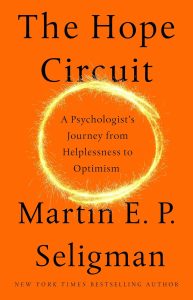
The Hope Circuit
Martin E.P. Seligman
Seligman traces the transformation of psychology from a focus on illness to a science of human flourishing. He introduces the hope circuit, a neural system in the medial prefrontal cortex that enables agency, optimism, and resilience, and shows how activating it can reverse patterns of helplessness. His later theory of prospection explains how imagining positive futures is central to human well-being and adaptive aging.
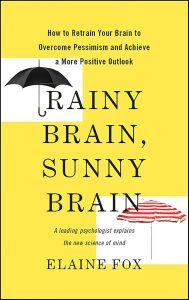
Rainy Brain, Sunny Brain
Elaine Fox
Fox explores how our brains balance threat and reward systems and how these can be consciously retrained. Her research indicates that optimism and resilience are not fixed traits, but instead learned habits that can reshape emotional circuitry. A valuable guide for those managing health challenges or supporting loved ones to find balance and possibility through change.