

Ryan Holiday’s Daily Stoic email on February 13, 2026, included this: “love … gives purpose to wisdom.” These five words articulate something I have noticed over several years in relationships, families, and organizations, and that was at the core of my own most profound growth, though I could not articulate it. In the Stoic and Enlightenment traditions, mature adulthood was described as the integration of reason, self-control, justice, and care for others. Research in psychology, leadership, and neuroscience shows that love, practiced over time, literally shapes the brain, the nervous system, and our patterns of action in the world.
Across decades of leadership studies, neuroscience, and caregiving research, a consistent pattern emerges: a life that most fully integrates courage, discipline, justice, and wisdom is anchored in love. Wisdom is often treated as primarily cognitive: good judgment, intelligence, and strategic thinking. Psychological research paints a fuller picture. Scholars such as Ursula Staudinger and Judith Glück describe wisdom as the integration of perspective-taking, emotional regulation, moral reasoning, and compassionate concern for others. In other words, wisdom is structurally other-regarding. It is not detached cleverness.
Neuroscience research on romantic, parental, and caregiving love shows activation in neural systems involved in reward, regulation, empathy, and social cognition. Love recruits the very networks required for wise reasoning: the ability to hold complexity, regulate impulses, and act beyond self-interest. Love is not merely a feeling. It is a whole-person phenomenon that organizes cognition, emotion, and motivation toward another’s good.
This makes Holiday’s claim both poetic and practical. Love emboldens courage because it gives us something worth risking for. It strengthens justice by directing fairness toward real people rather than abstractions. And it gives purpose to wisdom because it orients discernment toward service instead of self-protection.
I began to see this most clearly not in leadership theory, but in parenting. Raising two children into adulthood required capacities I doubt I would have cultivated otherwise. I learned to practice what Kim Scott calls radical candor, caring personally while challenging directly. I learned to regulate my emotions when the stakes felt high and the outcomes were uncertain. I learned to advocate when information was incomplete. I learned to stay in a relationship through disagreement. And perhaps most importantly, I learned to care deeply while surrendering control of outcomes.
Developmental theory calls this generativity: sustained investment in another’s flourishing over time. Research suggests that parenting and caregiving roles cultivate perspective, emotional regulation, and long-horizon thinking, the very capacities associated with wisdom. Parenting and eldercare demand commitment without domination, advocacy without ego, and perseverance without certainty.
Love as Teacher and Developer
During one particularly demanding season: intensive parenting overlapping with eldercare, investing in relationships while building a business, I focused on making a shift in how I responded under pressure. I had previously taken the Herrmann Brain Dominance Instrument (HBDI), an assessment that maps thinking preferences across four domains: analytical (data and logic), structural (organization and sequencing), relational (interpersonal and emotional awareness), and conceptual (big-picture and imaginative thinking). Historically, my profile showed strong preferences in the relational and conceptual quadrants. Under stress, those tendencies intensified. I leaned even more heavily into empathy and possibility. But parenting and eldercare required something different. It required precision in medical conversations. Clear sequencing of next steps. The ability to regulate emotion and stay grounded in facts when the stakes felt high.
I intentionally began to practice different skills and ways of thinking. Under stress, I would pause and ask, “What are the facts?” What is within my control? What is the next structured step? It felt effortful. Over time, effort became access. Years later, when I retook the HBDI, my stress profile had shifted dramatically. Instead of overextending my natural strengths, I was drawing more consistently on analytical and structural modes under pressure. Neuroscience calls this experience-dependent plasticity. The brain strengthens the pathways it repeatedly uses. Love required steadiness. Steadiness required discipline. Discipline, practiced consistently, rewired how I think and lead.
Caregiving did not increase my compassion; that instinct was already strong. What it strengthened was discipline: the ability to regulate emotions, think long-term, challenge directly, and hold another’s best interests at heart while relinquishing control of the outcome. That integration reshaped how I lead in every domain of my life and how I live now. This development occurred in midlife for me, and life continues to present opportunities for growth in the same vein. Neuroscience shows that we can continue to grow, develop, and refine the love that gives purpose to wisdom.
Love In Leadership
In Heroic Leadership, Chris Lowney identifies love as one of the four pillars of Jesuit leadership. He does not mean sentimentality. He means disciplined commitment to creating environments of dignity and mutual respect where ambition is directed toward mission and people rather than ego.
For more than five decades, James Kouzes and Barry Posner have studied leadership from the follower’s perspective. Their practice of “encouraging the heart” is not about being nice; it is about setting high standards, recognizing contribution, celebrating shared values, and sustaining morale through consistent attention.
Jim Collins describes Level 5 leaders as those who blend personal humility with fierce professional will. Their ambition is channeled outward toward the long-term flourishing of the organization and its people. They absorb blame, distribute credit, and stay steady when volatility tempts reaction. By contrast, in his research captured in How the Mighty Fail, he finds in many ways, the photographic negative is evident when humility, truth-telling, and long-term care for people give way to hubris, the undisciplined pursuit of more, denial, and quick fixes, as organizations slide into self-inflicted decline.
John C. Maxwell charts a similar arc in his 5 Levels of Leadership. The pinnacle is not positional authority but the ability to lead people who love to follow you, leaders who consistently add value to others, develop them, and sacrifice for something larger than themselves.
Strip these frameworks down, and you find leaders who look remarkably like wise caregivers:
- They care deeply.
- They regulate emotion under pressure.
- They tell the truth with grace.
- They think long-term.
- They quiet the ego’s demand for control.
Sustainable leadership requires the same inner discipline as parenting and eldercare. It demands the ability to hold complexity without panic, to challenge without contempt, and to commit without clinging. Love is not softness, it is orientation. It directs courage. It steadies discipline. It gives purpose to wisdom.
A Life Anchored in Love
When Paul writes in 1 Corinthians 13 that faith, hope, and love remain, and that the greatest of these is love, he is not dismissing the others. Faith trusts. Hope looks forward. Love determines how power, knowledge, and strength are used. Without love, wisdom can be cold. Without discipline, love can be indulgent. Without humility, leadership can be self-serving. Later in the same chapter, Paul writes that even if we have great faith, knowledge, and strength but lack love, we are but a “noisy gong or clanging cymbal,” reminding us that the greatest skill or wisdom without love is mere noise: disruptive and hollow.
 What endures in relationships, families, organizations, and communities is integration. The life that most fully integrates courage, discipline, justice, and wisdom is anchored in love. Anchoring is not passive. It is practiced. It is built on the many moments when we regulate rather than react, when we challenge directly while caring personally, when we choose long-term flourishing over short-term optics, and when we release the illusion of control and remain deeply committed anyway. Love, practiced this way, becomes wisdom in motion. Love becomes the engine of wisdom.
Questions for Reflection
- Where in your life is love asking for more discipline rather than more emotion?
- Under stress, do you amplify your natural strengths or stretch toward integration?
- What would it look like to care deeply while releasing control of the outcome?
- Where might a longer time horizon change a decision you are facing right now?
Practices to Experiment With
- Regulate Before Responding: In your next tense interaction, pause and identify the facts and the next structured step.
- Challenge With Care: Pair clarity with explicit affirmation of the other person’s value.
- Lengthen the Horizon: Ask about one major decision this week, how it will look in five years.
- Release the Outcome: Identify one situation in which you are overcontrolling. Stay committed, but loosen your grip.
Additional Reading
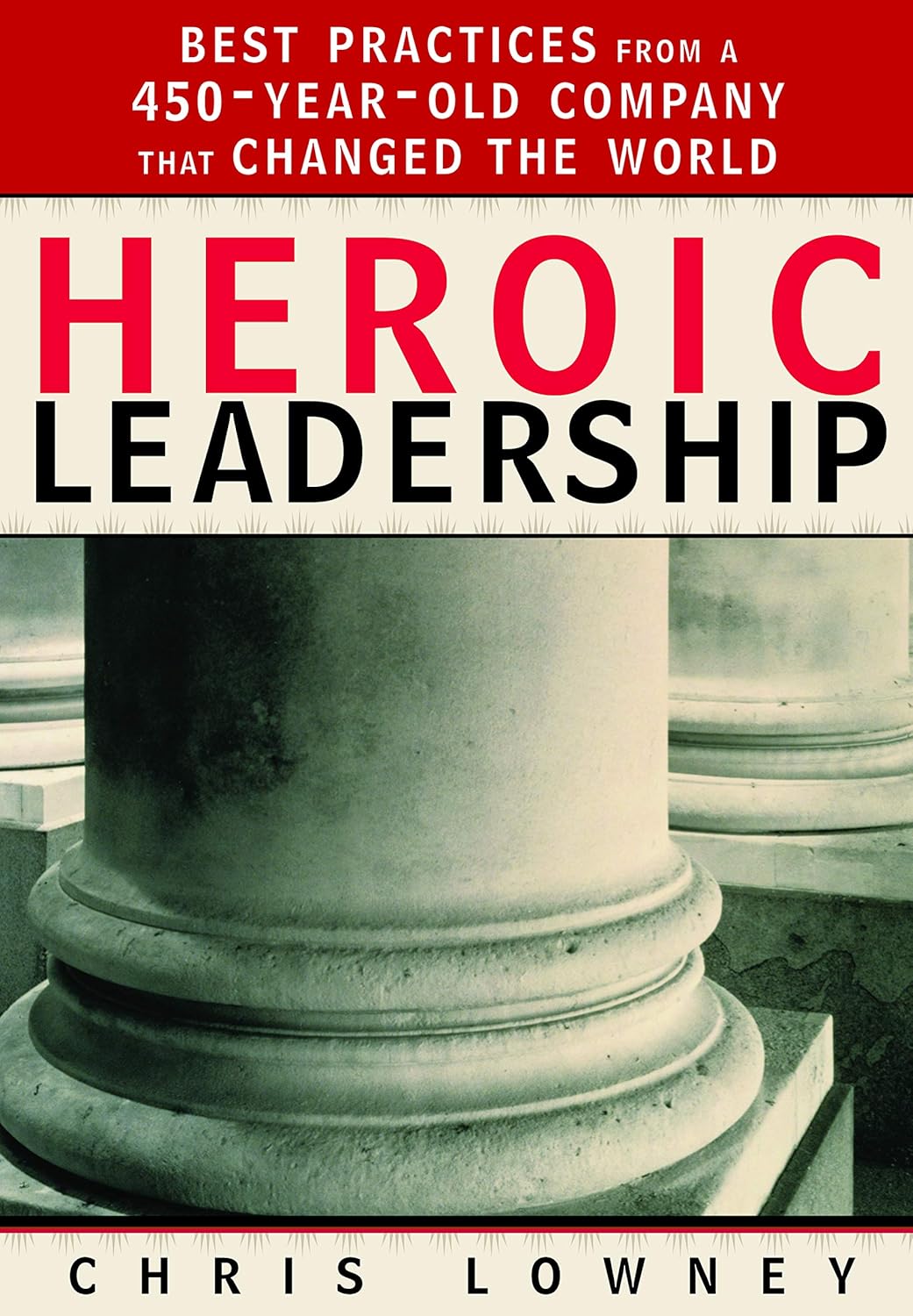
Heroic Leadership
Chris Lowney
In Heroic Leadership, former Jesuit seminarian and J.P. Morgan executive Chris Lowney distills 450 years of Jesuit practice into four leadership pillars: self‑awareness, ingenuity, love, and heroism. He defines love in explicitly leadership terms as wanting the good for others, recognizing their God‑given potential, and creating environments “with greater love than fear,” which parallels this blog’s argument that mature, long‑term leadership is essentially wisdom anchored in love.
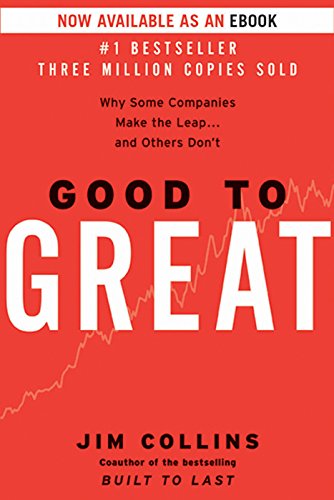
Good to Great
Jim Collins
In Good to Great, Jim Collins shows that companies that make the leap to sustained excellence are led by “Level 5” leaders who combine personal humility with fierce professional will and build cultures of discipline around self‑disciplined people, disciplined thought, and disciplined action. Their ambition is channeled into the long‑term flourishing of the organization and its people, offering an empirical blueprint for the same love‑shaped wisdom and ego quieting that this blog traces in parenting, eldercare, and faithful leadership
References
Collins, J. (2001). Good to great: Why some companies make the leap and others don’t. HarperBusiness.
Collins, J. (2009). How the mighty fall: And why some companies never give in. HarperCollins.
Glück, J. (2018). Measuring wisdom: Existing approaches, continuing challenges, and new developments. The Journals of Gerontology: Series B, 73(8), 1393–1403. https://doi.org/10.1093/geronb/gbx140
Holy Bible, New International Version. (2011). Biblica. (Original work published ca. first century)
Holiday, R. (2026, February 13). Love gives purpose to wisdom [Email newsletter]. The Daily Stoic.
Kouzes, J. M., & Posner, B. Z. (2017). The leadership challenge (6th ed.). Wiley.
Lowney, C. (2003). Heroic leadership: Best practices from a 450-year-old company that changed the world. Loyola Press.
Maxwell, J. C. (2011). The 5 levels of leadership: Proven steps to maximize your potential. Center Street.
Scott, K. (2017). Radical candor: Be a kick-ass boss without losing your humanity. St. Martin’s Press.
Staudinger, U. M., & Glück, J. (2011). Psychological wisdom research: Commonalities and differences in a growing field. Annual Review of Psychology, 62, 215–241. https://doi.org/10.1146/annurev.psych.121208.131659