
How Relationships Help Us Age Well
The third period of life, roughly our sixties and beyond, invites a more searching set of questions. Less about achievement. More about endurance. Less about independence. More about interdependence. One of the most powerful questions is, who walks with us when things get hard?
Look at us, after all that we’ve been through.
One night, that question became very real for me.
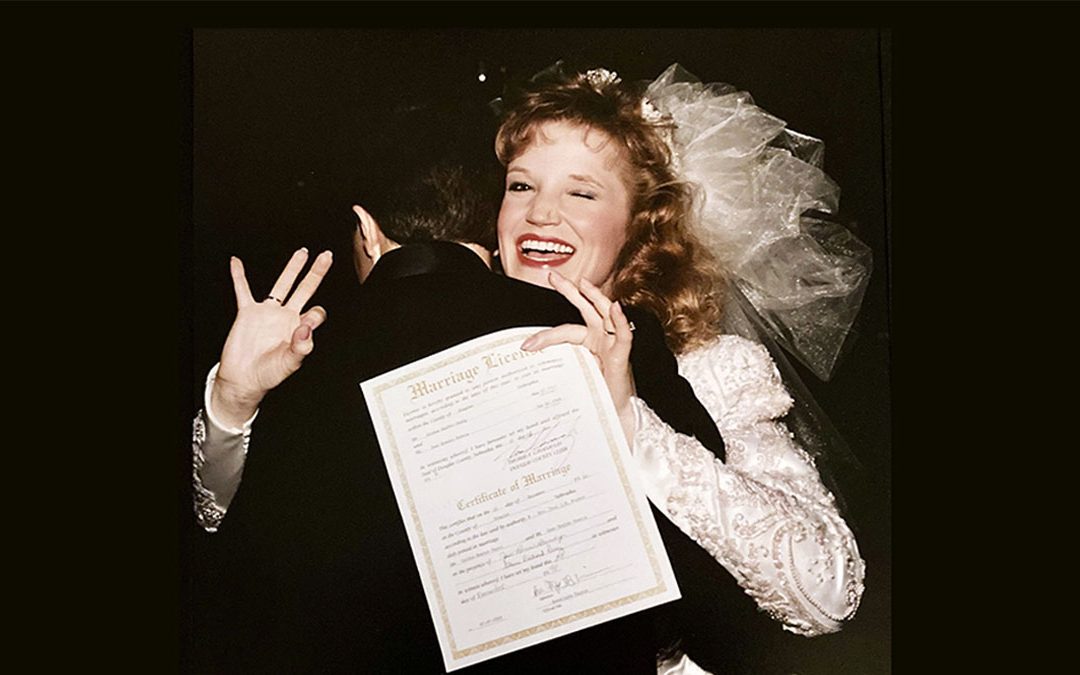
In the early hours of our twenty-third wedding anniversary, my wife likely saved my life. The night before, we were in an overwhelmed emergency room. I was getting worse. The pace was slow, and the system was strained. My wife, calm, confident, and steady, recognized something was not right. She made a phone call and then insisted we go to another hospital. There, I was quickly diagnosed and soon taken into emergency surgery. As dawn broke on our anniversary, the surgeon told us I had been within an hour of a life-threatening event.
We recently celebrated thirty-four years of marriage. That night remains one of the clearest reminders that we are better together, not only in the good moments but also in the moments when partnership becomes protective, even lifesaving.
As I have spent time researching aging and long-term relationships, I have been struck by how closely the science aligns with lived experience. Thriving in the third period of life is not about avoiding difficulty. It is about how and with whom we meet it.
Why Relationships Matter as We Age
Decades of research point to a consistent finding. Warm, dependable relationships are among the strongest predictors of well-being in later life.
As director of the Harvard Study of Adult Development, one of the longest-running longitudinal studies ever conducted, George Vaillant summarized the findings with characteristic clarity. “Happiness is love. Full stop.” Across the lifespan, people with close, supportive relationships tend to be healthier, more resilient, and more satisfied with their lives as they age, often more so than those with greater wealth, recognition, or status.
Large population studies reinforce this conclusion. Strong social connections are associated with substantially lower mortality risk. The protection offered by meaningful relationships rivals that of many traditional health factors. What matters most is not the absence of struggle but the presence of someone who can be counted on when struggle arrives.
Thriving in the third period of life means recognizing that relationships are not peripheral to health. They are central to it. They also require our investment, discipline, and care.
Not Perfect, but Connected
Long-term love is sometimes imagined as effortless harmony. Research suggests otherwise.
John Gottman’s work with couples shows that enduring relationships are defined not by the absence of conflict but by how partners stay connected through it. Stable couples avoid letting criticism, defensiveness, contempt, and withdrawal become habitual. Over time, they maintain a steady tilt toward positive interactions. A guideline, backed by research, is five positive moments for every negative one.
Most importantly, Gottman’s research shows that many disagreements are perpetual, rooted in personality, temperament, and preferences. Healthy couples do not resolve these differences. They learn to live with them, often with humor, curiosity, and respect. Ultimately, they honor these differences for the richness and completeness they bring to the relationship.
Over decades, that steady orientation toward connection matters, especially as couples face health scares, retirement, caregiving, and loss. In our own marriage, we work to remember that the relationship itself is larger than the moment we are in.
Thriving in the third period of life means staying connected, not always getting it right, and, more importantly, not always working to be right or to right the other person.
The Quiet Power of “We”
There is a song by Vince Gill that has stayed with me through the years. It was released the year we were married. Its language is simple and unadorned, and it names something the research confirms.
Look at us, after all these years together.
Look at us, after all that we’ve been through.
Long-term couples who thrive share a strong sense of “we.” They believe life is a shared project, shaped by a shared past and oriented toward a shared future. This sense of we shows up in remembering what has been carried together, in telling stories that turn hardship into shared meaning, and in imagining what comes next, not alone but together.
Look at us, still leaning on each other.
These shared stories help make present difficulties feel like one chapter, not the whole book. They place today’s challenges within a longer narrative of endurance, commitment, and care.
Thriving in the third period of life means knowing that we are not carrying life alone.
Trust and the Family Around Us
Trust becomes especially visible under pressure. Charles Feltman describes trust as resting on sincerity, reliability, competence, and care. That night in the emergency room, Jane displayed all four at once.
Marriages do not exist in isolation. Over time, we have chosen to protect one another’s reputations within our families. We decided to build respectful, warm relationships with those around us. The result has been a family ecosystem that supports our marriage rather than strains it. Thriving in the third period of life often depends not only on the partnership itself but also on the relational environment that surrounds it.
The Habits That Sustain Love
Our brains are naturally attuned to what is wrong. Left unchecked, this negativity bias can quietly erode connection. Thriving couples learn to counter it with small, consistent practices. They notice what their partner does right. They express appreciation in ordinary moments. They choose generous interpretations when misunderstandings arise. They maintain simple rituals that bring them back to one another: walks, shared meals, regular check-ins, and familiar stories retold.
Often, the most connecting response is not advice or reassurance but a simple, sincere question. How can I help?
Helen Kain, my trusted business partner, offers two pieces of marriage wisdom. The first is “don’t go to the hardware store for milk,” which reminds us to know what our partner can reasonably give and not to ask for what they don’t carry. The second is never to miss an opportunity to be quiet or stated more directly, “just to shut up.” The positivity in a relationship increases dramatically when we remember that not every thought needs to be expressed, and we can affect that positivity ratio by caring for both the numerator and the denominator.
Thriving in the third period of life is sustained more by steady care than by grand gestures.
For Those Without a Partner
Not everyone enters this season with a spouse. Some have lost a spouse. Some have left marriages that needed to end. Some have never married and have built rich lives of connection in other ways. The research is clear. Thriving in later life does not require marriage. It requires relationships.
Close friendships, siblings, adult children, neighbors, faith communities, and chosen family provide many of the same protective benefits. Shared stories and shared rhythms are not exclusive to couples. A small circle of people who know your history and show up consistently can create a powerful sense of “we.”
Thriving in the third period of life means recognizing that none of us is meant to age alone.
Relationship Inquiries:
- Who are the two or three people you rely on most in this chapter of life?
- How are you tending those relationships, not just enjoying them?
- What small rhythm of connection might you strengthen or begin?
- How is the 5:1 positive-to-negative ratio going? What changes might you make to the numerator or denominator?
- What gratitude might you want to express to those who make up your “we”?
A Closing Reflection
As I reflect on the research, the stories, and the decades of shared life, what rises most strongly is gratitude. Gratitude for a partner who has stood with me in every season. Gratitude for the battles we have fought side by side, the children we raised together, and the many moments, quiet and extraordinary, when her strength became my strength, and mine hers. Gratitude for the life we have built, the ways we have grown, and the future we still imagine with hope.
Look at you, still pretty as a picture.
Look at me, still crazy over you.
However your life is configured, partnered, single, widowed, surrounded by family, or rebuilding connection, the third period of life invites us to tend the relationships that keep us human, hopeful, and grounded.
Look at us, still believing in forever.
Resources for Further Reflection
The Seven Principles for Making Marriage Work
John Gottman
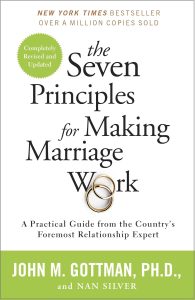
Grounded in decades of research, Gottman’s work offers a clear and humane understanding of what sustains long-term relationships. Rather than focusing on the absence of conflict, he emphasizes emotional connection, shared meaning, and small, repeated acts of care. His insights affirm that thriving partnerships are built over time, not perfected.
Wait, What?
James E. Ryan
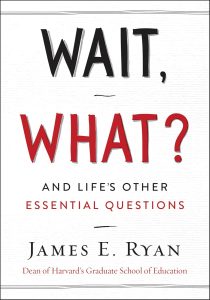
In Wait, What?, James Ryan explores the power of asking better questions. While written broadly for life and leadership, the book is especially valuable for relationships. One question in particular stands out. How can I help? Asked with sincerity, it shifts attention away from control or assumption and toward attunement and service. Over time, this simple question deepens trust, strengthens partnership, and often opens the door to insight that analysis alone would miss.
References
- Gottman, J. M., & Silver, N. (1999). The seven principles for making marriage work: A practical guide from the country’s foremost relationship expert. Crown Publishers.
- Holt-Lunstad, J., Smith, T. B., & Layton, J. B. (2010). Social relationships and mortality risk: A meta-analytic review. PLOS Medicine, 7(7), e1000316. https://doi.org/10.1371/journal.pmed.1000316
- Ryan, J. E. (2017). Wait, what? And life’s other essential questions. HarperOne.
- Vaillant, G. E. (2012). Triumphs of experience: The men of the Harvard Grant Study. Belknap Press of Harvard University Press.;


Gordon; I really enjoyed your comments about marriage and life-long partnership. Unfortunately, the loss of your life-long partner is devastating and recovery is very difficult and never-ending. And then the loss of one’s first born child compounds the grief and is also never-ending. Yes, friends and family are a source of comfort and joy. However, life is never the same and the grief is endless.
You are right, life cannot be the same after losing a spouse who shared decades of your life, or after losing a child. Those are losses we don’t recover from; they become part of who we are