
Somewhere right now, a mechanic is bent over an engine that either will run or will not. A painter stands before a canvas, revising a line that still does not look quite right. A parent is interacting with their adult child, helping them think through an important career discussion with their leader. Partnering with them, without announcing it, to think, persist, and revise, and building skills that will last a lifetime. These are all ateliers, whether or not anyone calls them that: places where life is treated as a craft and practiced in full view of others.
In recent years, considerable time has been spent worrying about the future, about screens, artificial intelligence, distracted attention, and whether younger generations are losing something essential. The tone of these conversations is anxious and pessimistic, as if meaning were slipping away and all we can do is narrate the loss. This is not the most helpful story available to us.
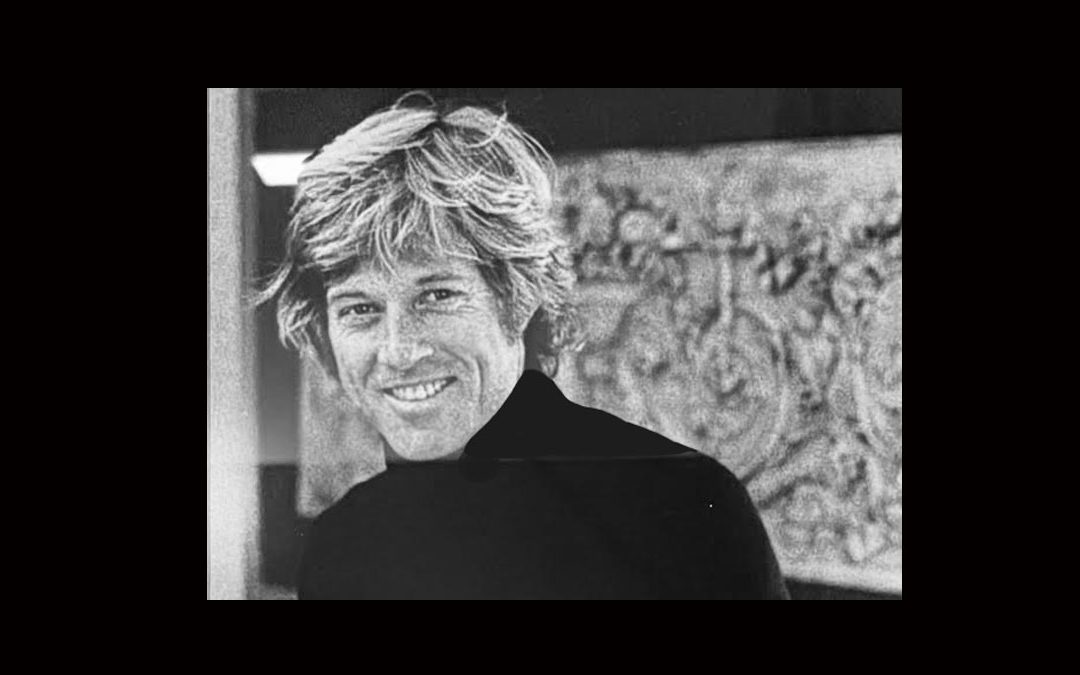
Meaning in modern life is not disappearing so much as relocating. It gathers wherever people are allowed to exercise judgment, responsibility, and care in relation to real work and real consequences. In this light, elders in the third period of life have a particular opportunity to become living ateliers, open studios where craft, courage, and care are practiced in ways others can see. Recently, a conversation with my business partner brought this to my attention. We found ourselves talking about Robert Redford, not his fame but his craft. What distinguished Redford was not celebrity but the seriousness with which he approached making work and protecting the conditions under which good work could be made.
Again and again, Redford chose story over spectacle, character over speed, and truth over market demand. He turned down projects that would have widened his profile but narrowed his standards, investing instead in environments where emerging filmmakers could take creative risks without being swallowed by commercial pressure.
That conversation sent me back to a body of work I have long admired by Matthew Crawford. Crawford is not only a philosopher reflecting on craft from a distance; he continues to work as a mechanic, teacher, and public intellectual whose thinking has deepened over time. Beginning with Shop Class as Soulcraft, he argued that meaning in modern life does not disappear so much as migrate toward places where people are allowed to exercise judgment, responsibility, and care in relation to real work and real consequences. In later books, including The World Beyond Your Head and Why We Drive, Crawford extends this argument into questions of attention, freedom, risk, and embodied engagement, showing how skilled practice disciplines perception and restores agency in an age of distraction.
Crawford’s credibility rests not in theory alone, but in lived accountability. He has continued to keep a hand on the repair bench while writing and teaching, refusing the split between thinking and doing. In his shop, the bench becomes a moral classroom. The engine either works or it does not. Judgment matters. Responsibility is visible. Pride comes not from branding or abstraction, but from competence earned over time.
Seen together, Crawford’s repair bench and Redford’s Sundance studios may appear worlds apart. Yet they share a moral architecture. Both are deliberately designed spaces that protect serious work from being hollowed out by abstraction or pure commerce. In both cases, meaning emerges not from individual expression alone, but from disciplined engagement within a community of practice. What follows is a set of connected images: Crawford’s repair bench, Redford’s mountain stages, classical painting ateliers, and the modern elder in everyday life. Together, they suggest a different story about aging and technology: not decline and displacement, but elders as active makers who model possibility rather than mourn it.
The return of the atelier
This pattern is not confined to mechanics or filmmakers. We see it today in the resurgence of ateliers, intensive, lineage‑based environments where craft is learned through observation, repetition, critique, and time. Schools such as the Florence Academy of Art, founded by Daniel Graves, have demonstrated that young adults and their multi‑generational classmates are not fleeing rigor. They are seeking it when it is coupled with visible mastery and meaningful work. Charcoal dust, long silences broken by critique, the slow correction of seeing clearly, these studios function as modern shops where submission to reality is not a constraint but a gift.
Crawford’s mechanics, Redford’s filmmakers, and Graves’s painters all learn this way: side by side, watching hands, absorbing judgments, and gradually improvising within a tradition that provides both structure and freedom. Together, Crawford’s shop floors, Redford’s stages, and contemporary ateliers tell a different story about our time. They suggest that the question is not whether meaning is possible, but whether we are willing to build and protect the environments where it can grow.
In my own work, I describe later life through the SKETCH Life Crafting framework: seeing what is, knowing our bright spots, envisioning what could be, testing and trying, continuing through reflection, and harvesting what can be handed forward. Modern elders who live this way bring four capacities into the studio: generativity, resilience, optimism, and wisdom. They invest in others, keep experimenting, imagine futures worth moving toward, and hold the paradox of aging as both loss and expansion with a steadiness that younger people can feel.
The modern elder as atelier
This is where the conversation turns toward aging and possibility. The idea of the modern elder (a term I was first introduced to in Chip Conley’s Wisdom at Work) reframes later life not as withdrawal but as continued participation. Modern elders bring emotional intelligence, pattern recognition, and perspective, while remaining curious, experimental, and engaged. Later life is not an exit; it is a continuation of the craft. It involves seeing more clearly, envisioning what could be, testing and trying, and harvesting experience in ways that can be handed forward.
What makes elders uniquely suited to this role is not authority, but practice. They stay at the bench. They keep making. And, importantly, they let others see the process, not just the finished product. They are less sages on a stage than master craftspeople with an open bench, wise experimental collaborators, and an invitation to others into the beauty and the mess of making. This is generativity in motion, inviting younger generations into real work and co‑authored futures.
Elders as ateliers: practical forms
In practice, an elder’s atelier may look less like a studio in Florence and more like an office, a neighborhood garden, a video conference room, or a monthly meeting for coffee. When elders live this way, they become living studios where craft, courage, and care are learned together.
These ateliers can take many forms:
- Turning one’s craft into an open studio: writing, painting, gardening, or community work organized around real, shared projects.
- Practicing visible life‑crafting: naming what you are seeing, testing, revising, and responding with curiosity when things do not go as planned.
- Co‑creating intergenerational work: co‑authoring an article, designing a community project, or building something literal together.
- Mentoring rather than lecturing, creating environments where thoughtful critique is part of the learning process.
- Hosting small circles of practice where people bring work in progress and learn side by side.
The elder is a master craftsperson with an open bench; still learning, still risking, and making room for others to discover their own craft.
Legacy without guarantees
We often assume that legacy depends on having enough time, enough years to complete the work, refine the craft, and put things in order. Legacy is not secured by the length of days. It emerges from how faithfully a person returns to the work of being human, practicing care, judgment, curiosity, and courage in ordinary circumstances.
I was reminded of this through the loss of a wonderful friend, Betty Harris. Her years in what I call the third period of life were far fewer than any of us hoped. And yet her impact was unmistakable. Not because her life reached a finished state, but because she had been refining her way of living for decades. The patterns were already set. The work was already speaking. In her third period, even though it was brief, she lived those patterns as generativity, resilience, optimism, and wisdom. Continuing to invest in others, adapt with humor, imagine good in the midst of uncertainty, and hold her reality with clear‑eyed grace. Betty’s life became, to me, a master work interrupted, like an unfinished painting whose visible layers and revisions make its beauty and influence even more apparent.
In art, unfinished canvases often reveal more of the artist’s hand than polished ones. The visible layers and revisions make the work more human, not less. Lives can be like that, too. A life need not be long to be complete in its influence.
If there is an invitation here, it is not to hurry or perfect our lives, but to practice them in the open. To treat our days as a craft worth tending, our relationships as shared work, and our experience as material to be handed forward while we are still here.
You do not need a grand platform to become an atelier. A kitchen table, a recurring walk, a small circle of practice, or a simple willingness to say, “Come sit beside me while I figure this out,” is enough. Legacy begins in the humble, repeated act of keeping a small bench open in a world where it is easy to become distracted and discouraged.
What this reveals (and invites)
These reflections point toward a few working insights, less as conclusions than as orientations that may be useful to test in your own life and work:
- Meaning does not vanish in modern life; it relocates. It gathers in places where judgment, care, and responsibility are protected and practiced together.
- Craft matters because it keeps us answerable to reality. Whether we are repairing an engine, shaping a conversation, leading a team, or tending a relationship.
- Elders contribute most not by standing above the work, but by staying engaged in it, continuing to make, revise, and learn in ways others can see.
- Legacy is formed incrementally, through daily practices that shape how others think, work, and show up long before any life appears complete.
Invitations to practice
Rather than prescriptions, consider these as experiments; small ways of testing whether treating life more deliberately as a craft changes what becomes possible:
- Notice where your life already functions as an atelier. Where do others learn simply by observing how you work, listen, decide, or recover when things do not go as planned?
- If you are in the third period of life, ask not only what you know, but what you are still actively crafting and who might benefit from being invited to the bench beside you.
- Choose one place this week, at work, at home, or in the community, where you can slow things just enough to protect seriousness, care, and attention in the presence of speed and distraction.
None of this requires certainty or expertise. A small, faithful bench is enough.
Further reading:

Shop Class as Soulcraft
Matthew B. Crawford
Crawford shows how meaning migrates toward places where people must exercise judgment, responsibility, and care in relation to real things, engines that either run or do not, repairs that either hold or fail. He argues that true agency is forged not in limitless autonomy but in submitting to the concrete limits of craft, where shared standards and tangible consequences shape character. For elders, his repair bench offers a potent image of the atelier: a humble, demanding space where thinking and doing stay welded together and where younger people can literally see what human competence, patience, and integrity look like in action.

On Becoming an Artist
Ellen Langer
Langer invites readers to treat creativity as mindful noticing rather than rare talent, showing how simply paying fresh attention can free us from rigid rules, comparison, and mindless autopilot. She makes the case that “beginner’s mind” and authentic experimentation are available at any age and that creative engagement is less about perfection than about noticing, play, and ongoing reinvention. For elders as ateliers, her work underscores that the studio is not just where art is made; it is any space where an older person models curiosity, reframing, and the courage to keep learning in public.